Caring for a loved one can be both rewarding and challenging. As families navigate the complexities of aging, chronic illness, or disability, the emotional well-being of both the caregiver and the recipient becomes crucial. This is where home care plays a pivotal role. Beyond providing practical support with daily tasks, quality home care offers significant emotional benefits, fostering a sense of security, dignity, and companionship for individuals in need.
By addressing both physical needs and emotional health, home care helps maintain a higher quality of life and strengthens the bond between caregiver and loved one.
Reduced Anxiety and Stress
One of the most immediate emotional benefits of professional home care is the reduction of anxiety and stress. For seniors and individuals with health challenges, the uncertainty of daily living tasks—such as cooking, bathing, or taking medications—can create constant worry. Having a trained caregiver available to assist with these activities ensures that routines are maintained safely, which can dramatically reduce feelings of stress.
Families also benefit emotionally from home care. Knowing that a loved one is being looked after by a professional provides peace of mind, alleviating guilt and worry that often accompanies caregiving responsibilities. Caregivers can focus on spending meaningful time with their loved ones rather than managing every practical detail, which strengthens family relationships and reduces burnout.
Research shows that seniors who receive consistent home care experience lower cortisol levels—the hormone associated with stress—and report higher overall satisfaction with life. This demonstrates that the emotional advantages of home care are not just subjective feelings but measurable outcomes that enhance quality of life.
Enhanced Social Connection
Loneliness and social isolation are significant emotional challenges, particularly among older adults. Many seniors live alone or are unable to engage in social activities due to mobility or health limitations. Quality home care addresses this issue by providing companionship and meaningful interaction throughout the day.
A caregiver often becomes a trusted friend, someone to converse with, share memories, and provide encouragement. These small but consistent interactions help seniors feel valued and connected, reducing feelings of loneliness. For individuals experiencing cognitive decline, such as those with dementia, this social engagement can stimulate memory, conversation, and emotional stability.
Moreover, home care can facilitate connections beyond the immediate household. Caregivers can accompany clients to community events, religious gatherings, or social clubs, enabling individuals to maintain active and fulfilling social lives. The emotional benefits of these experiences are profound, reinforcing self-worth and preventing the negative psychological effects associated with isolation.
Preserved Independence and Dignity
A central emotional benefit of home care is the preservation of independence and dignity. Many seniors fear losing autonomy as they age, which can lead to frustration, depression, and a diminished sense of self. Home care allows individuals to remain in their own homes, maintain their routines, and make choices about their daily lives.
Caregivers provide support tailored to the client’s needs without taking over, empowering individuals to perform tasks they can manage while assisting with those that are challenging. This balance fosters confidence and self-esteem, as clients feel capable and respected rather than dependent.
Maintaining independence also impacts emotional resilience. People who feel in control of their lives experience lower rates of depression and anxiety, as well as a stronger sense of purpose. Quality home care ensures that aging or health-related limitations do not erode personal dignity, which is fundamental to emotional well-being.
Improved Mental Health and Emotional Stability
Another significant advantage of professional home care is its positive effect on mental health. Many individuals who require assistance struggle with feelings of sadness, frustration, or fear related to declining health or mobility. Regular support from a compassionate caregiver provides reassurance and stability, which can improve mood and overall emotional balance.
Home care services often include structured activities designed to engage the mind, such as reading, puzzles, or creative hobbies. These activities help combat cognitive decline while promoting joy and emotional satisfaction. Furthermore, caregivers are trained to recognize signs of depression or emotional distress, offering timely support and intervention when needed.
Family members also experience emotional benefits, as they are relieved from constant worry and the physical and emotional strain of full-time caregiving. This shared support system strengthens family bonds and promotes a healthier, more positive environment for everyone involved.
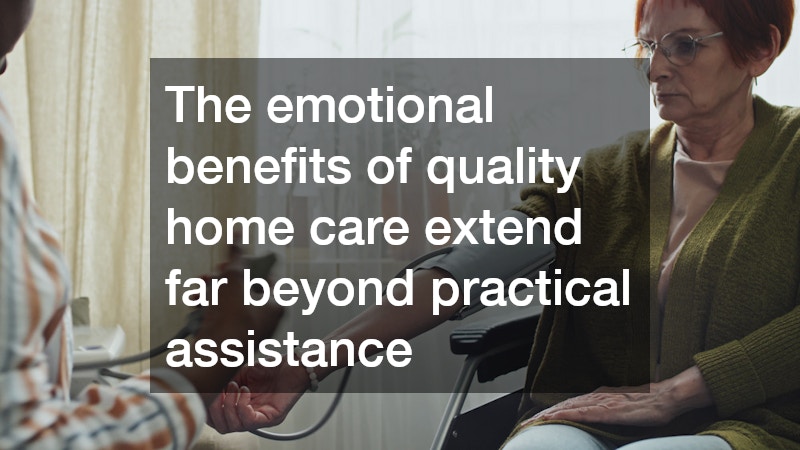
The emotional benefits of quality home care extend far beyond practical assistance. By reducing stress and anxiety, enhancing social connections, preserving independence and dignity, and improving mental health, home care fosters a nurturing environment where individuals can thrive emotionally as well as physically.
Choosing professional home care is an investment in both the well-being of your loved one and the peace of mind of your family. In a world where emotional health is often overshadowed by physical needs, home care ensures that compassion, connection, and dignity remain central. Ultimately, the right home care arrangement can transform daily life, allowing individuals to experience comfort, happiness, and a renewed sense of emotional security.